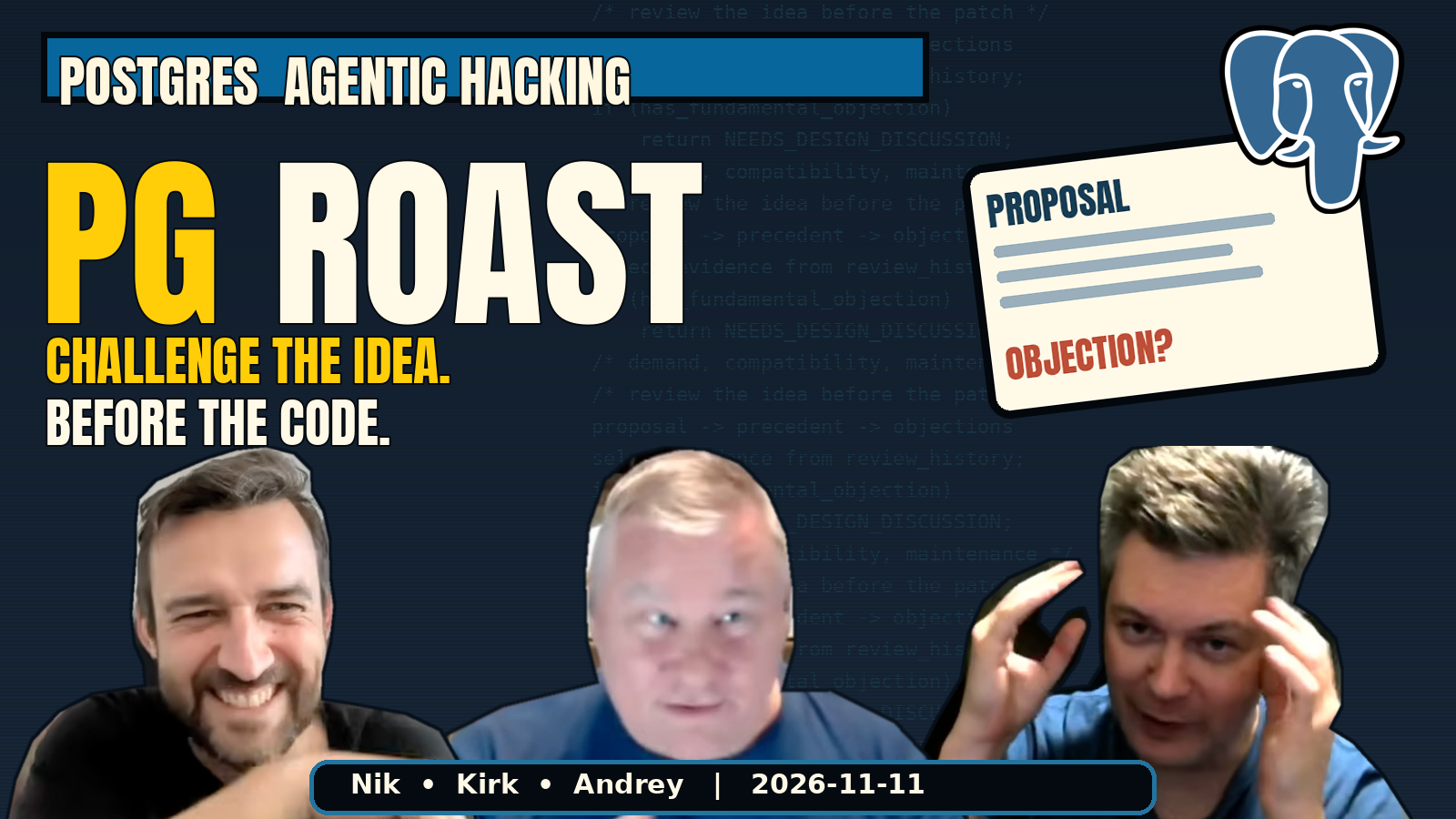
Challenge the idea before the implementation
Start with the problem, user demand, and whether the idea belongs in Postgres; then examine design and implementation. Andrey pointed to Robert Haas’s “Committer Paranoia” as a review rubric. Prior rejection threads should supply evidence, not an excuse to manufacture objections.
Seven perspectives, then a critic
The proposed first version covers demand, standards and compatibility, prior attempts, replication and on-disk changes, security, maintenance and fit, and existing alternatives. A critic attempts to refute the objections. High-risk subsystem changes call for expert review, not automatic rejection.
A shortlist, not mass rejection
The group proposed selecting roughly 10–20 patches worth committer attention. Correctness and fit are separate from priority: useful but neglected work may need a champion, bundling, or a design rethink. Age alone is not grounds for closing an entry. “CommitFest Shortlist” was the preferred working name.
Find the actual blocker and the right reviewer
Each entry should explain the real unresolved pushback with message links. Personalized or subsystem-based lists and visible claiming can avoid duplicated effort. Git history, trailers, and discussion participation can suggest relevant experts; contact stays human-mediated.
Preflight, field tests, and deeper follow-ups
The discussed pipeline starts with mechanical checks, reusing cfbot evidence where available, then design critique and scenarios that exercise a patch as if committed. Supervisor rounds ask what was missed. The B-tree merge discussion motivated explicit subsystem invariants instead of assuming an agent will infer them.
Short human-owned mail, optional detail
Keep the message body short and take responsibility for its claims. Clearly labelled AI detail can live in attachments or an opt-in report. The discussion favored calm, evidence-first language rather than publishing the “roaster” persona to the list.
Start privately and measure the results
The closing pilot starts with CommitFest entries and Andrey’s own patches, with the author involved. Historical proposals and reverted commits were suggested for evaluation. A post-commit testing watcher and a reduction in the active backlog are proposed goals, not measured results.